
July 19
Divine Service
Matthew 6: 11
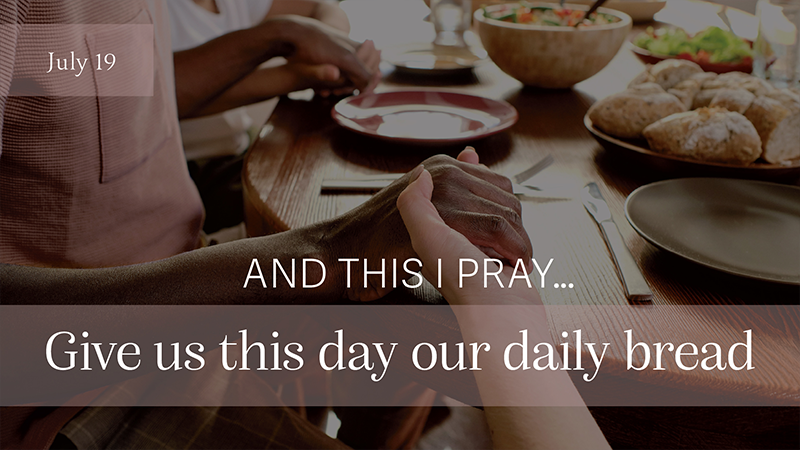
Give us this day our daily bread
Where are we in the Bible?
In the Lord’s Prayer, Jesus teaches us first to pray for God’s name to be hallowed, for His kingdom to come, and for His will to be done. Only then do we pray for our needs, the ordinary realities of life: bread, forgiveness, temptation, and deliverance. The order matters. God’s reign and God’s will must shape every earthly concern, every daily decision, and every human desire. The Lord’s Prayer reminds us that dependence on God is not reserved for spiritual moments alone; it belongs equally in the kitchen, the workplace, the marketplace, and the quiet anxieties of daily living.
In its original context, the request for daily bread reflected a posture of dependence on God rather than long-term self-sufficiency. Bread was the most basic necessity of life. Many laborers earned only enough for a single day’s needs, so “daily bread” meant trusting God to provide what was necessary one day at a time. The phrase also echoes God’s provision of manna in the wilderness, where Israel received only enough bread from heaven for each day. Through this, God taught His people reliance rather than self-security.
Summary:
When we pray, “Give us this day our daily bread,” we confess our daily dependence on God for both earthly provision and the living Bread, Jesus Christ, while committing ourselves to seek first His kingdom and become instruments of His care and provision for others. We pray for what we truly need—bread for today, not merely for ourselves but for everyone included in the “us” and “our” of the Lord’s Prayer—trusting God with our future and overcoming fear through faith in His faithful provision.
Foundational Reading
Scripture: Matthew 6
Catechism: 12.1.7.2.5, 12.1.5.2 - for Holy Communion